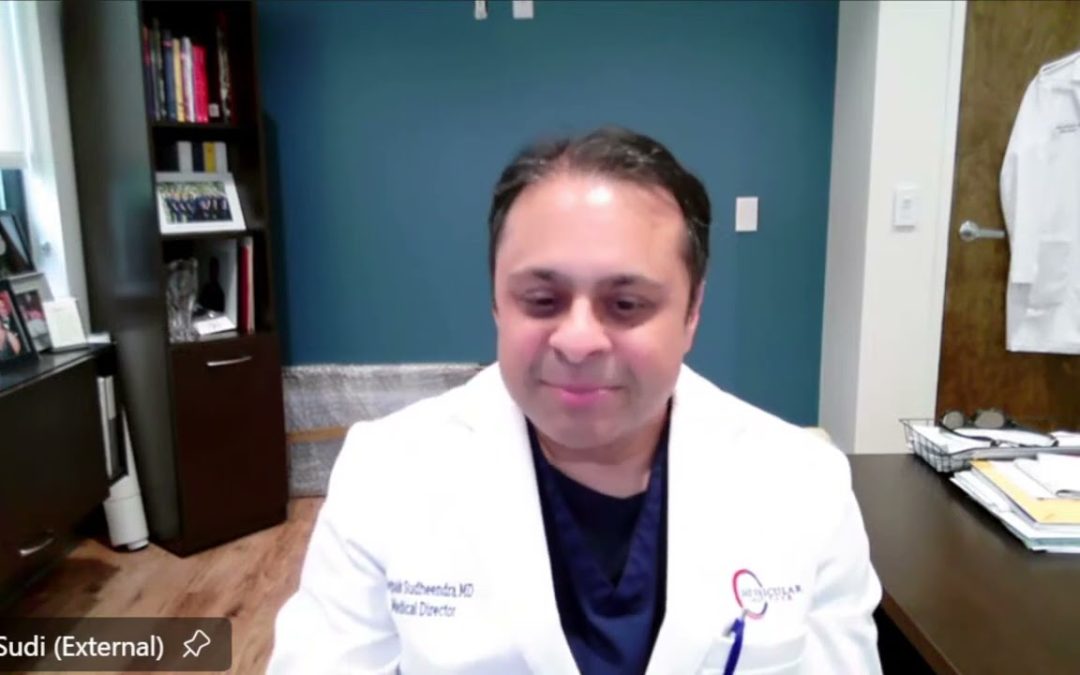
When President Trump was diagnosed with chronic venous insufficiency, a condition most people have never heard of was suddenly in the headlines. I sat down to explain what CVI actually is, why it is so often missed, and what you can do about it. Here is a summary, and the full conversation is above.
What Is Chronic Venous Insufficiency?
Your arteries carry blood from the heart down to your feet, and your veins carry it back up. To fight gravity, your veins rely on one-way valves that push blood upward. As we age, and with risk factors like genetics, pregnancy, extra weight, and long hours sitting or standing, those valves start to fail. Blood then flows backward and pools in the legs. That is chronic venous insufficiency.
Why It Is So Underdiagnosed
CVI is remarkably common. On the low end, one in four adults will develop it, and with added risk factors that number climbs much higher. Yet it is barely taught in medical school or most training programs, which focus on arterial disease. The result is that patients go years with heaviness, swelling, or aching legs and never hear the words vein disease.
The Symptoms Most People Miss
Everyone knows the ropey varicose veins, but only about a third of patients get those. The other two-thirds have symptoms you cannot see: heaviness and fatigue, throbbing or cramping, restless legs, night cramps, ankle swelling, itching, and skin discoloration. In later stages, wounds that will not heal. In fact, about 70% of leg ulcers are caused by vein disease. Many people are told their restless legs are neurological or their swelling is a mystery, when the real cause is their veins.
Getting the Right Test
The gold standard is a venous ultrasound, but it has to be done correctly, standing up. Done lying down, it is really just a clot study and will often miss the diagnosis. A proper standing reflux ultrasound takes about an hour and shows whether blood is falling backward down the veins. If your legs are swollen and heavy but your ultrasound came back normal, ask whether it was done standing.
How CVI Is Treated
Treatment starts conservatively, and I believe nearly everyone benefits from compression stockings. I have worn them myself for 25 years. Weight loss, exercise, and elevating the legs above the level of the heart all help. When those are not enough, the faulty veins can be closed with a minimally invasive procedure such as thermal (laser or radiofrequency) ablation, which has about a 98% success rate. The key is that we are treating the underlying valve failure, not just the visible veins.
Should You Worry?
CVI is not going to shorten your life, and I would not want anyone to panic. But calling it benign and moving on is exactly the attitude that leaves so many people suffering. It is a quality-of-life condition, and the earlier you address it, the more you can slow its progression. The good news: it is rarely urgent. You have time to learn, ask questions, and make a good decision.
Key Takeaways
- CVI happens when the valves in your leg veins stop working and blood pools in the legs.
- It is very common and very underdiagnosed. One in four adults will develop it.
- Symptoms go far beyond varicose veins: heaviness, swelling, restless legs, skin changes, and ulcers.
- Insist on a standing reflux ultrasound. Lying-down studies miss it.
- Start with compression stockings and lifestyle steps; ablation is highly effective when needed.
Related reading: How Compression Stockings Help, The Importance of the Standing Reflux Ultrasound, and Why Leg Ulcers Don’t Heal.